Showing posts with label music. Show all posts

Saturday, October 31, 2015

15 Things about Vietnam #10 - Vietnamese Cool

Throughout Asia, cool has minor but essential variations, as anyone knows who has been here for more than a cocktail under a palm-tree.

In China, there is off-shore cool and mainland cool, HK cool and SH cool.

There are the various versions of Indian cool, which revolve largely around themselves (Tollywood, masala movies, kurtas with tight leggings), just as there are a vast range of Japanese cools, including everything from computerized pets ("Aibo") to stylized asexual drifting ("hervibores").

The Thais, of course, do a nice little line in sexual androgyny too. Free of Christian sex-complexes and Chinese obsessions with social self-control, they manage to sneak the idea of pleasure into a fairly traditionalist culture in a fairly cool way.

While Japanese cool takes elements of the foreign and transforms them without giving the rest of the world much of a look in, Korean cool is basically export-oriented; its main products are candy-coloured t-shirts, bloodless teen comedy and I-left-my-brain-at-home girlbands:


In plenty of Asian cities, you’ll find old colonial palaces and plenty of other ageing colonial architecture, which none of the locals find especially cool. You’ll also find the remnants of much older civilizations – standing there as mute testaments to the days before human beings needed the ideas of cool and uncool to mark the difference between social up and down, in and out, beautiful and ugly.

In all of Asia, serious money has been made in recent history, sometimes in obscene quantities. And the purchasing power of those who did the making has kick-started the sorts of commercial arts, the competitive displays, the restless imitation and change that make more things seem cool or uncool in the first place.

Being cool in Asia normally involves taking a splash in global culture – hence the fascination with the standard Western accessories, tv formats and pop-music genres. Hence also the uncoolness of a lot of Asian Cool in the minds of formidably cool Westerners who, when in Asia, tend to idealize precisely what they despair of back home in the West (oversized urban jungles, poverty) or what Asians despair of in Asia (hidebound traditions, sleepy country ways).

Hence also one of the advantages of Asian Cool: because it takes its lead a lot of the time from a kind of super-culture, global culture, it mainly avoids splitting itself into a hopeless muddle of subcultures the way Western culture does. Cool is something it is almost impossible to be in the West – what is cool in one corner of the social landscape is boring, weird or incomprehensible in the next. (Who over the age of 23 is really cool anyway? etc) To be cool in Asia all you need, at least to get started, is enough money to spend at an upmarket shopping mall.

This makes it sound as though what is cool in Asia is mainly what comes from somewhere else (the fashions and accessories of the wealthy, enviable West). But that’s much truer in some places than in others.

At its worst, Asian cool is a game of catch-up with the West, played with a conformism that is pretty hard to take. At its best, cool is also what renovates homegrown Asian tradition in any way that seems attractive, interesting or fun. And what Vietnamese girls and boys find cool is no exception.

*

The latest thing to become cool in Vietnam is dancing.

Do Vietnamese kids think they can dance?

Having been taught at school to hold everything in, most are not sure whether they can, but watching other people who can (or who are trying) is definitely a whole lot of fun.


The second-latest thing to become cool in Vietnam is singing. Most Vietnamese, in their upbeat moments – and all Vietnamese men in their drunken moments – think they can. They don’t need American tv formats to convince them they can. But the imported formats (and the imported speaker-systems) definitely give the whole show a huge boost.


The thing that became cool the day before yesterday is – Korean stuff. (South Korean stuff of course. There is nothing cool in the minds of young Vietnamese about fat underage dictators or armies of goose-stepping zombies.) Vietnamese girls, particularly in Hanoi, swallow Korean fashions whole. So at the moment they go for the “boyish” look (long baggy trousers and short hair):


or the "sporty" look (big glasses frames, singlet-tops, high-riding shorts and sneakers):


(The sporty look, of course, has nothing to do with any sort of interest in sport. Most Vietnamese girls would break into a sweat at the idea of breaking into a sweat.)

Korean pop music (Bigbang, Psy, Girls Generation) effortlessly conquers the hearts and minds of Vietnamese teenagers, while the Korean film industry is considered a model for the local industry. There are essentially three types of Korean film that find their way into Vietnamese cinemas: quirky comedies, quirky horror films and quirky “historical” films – the latter being thinly disguised comedies in which ancient Korean princes talk like witty Seoul teenagers.

Compare Korean historical films with the vast quantities of historical pastiche being churned out in HK and SH. In Vietnam, Chinese historical dramas are basically fodder for retirees and car-park attendants. Full of the same bitchy princesses, the same growling monarchs, and the same endless Ang-Lee-inspired effects, they have a relatively small following which doesn't let on too much about its Sinophilic habits. Such is the enmity between the two countries, no matter how rich the Chinese get, the Vietnamese are never going to accept that the Chinese are cool in any essential way.

While there’s no question of them bumping the Koreans for the top spot on the list of cool Asian nations, the Thais are definitely also getting cooler in Vietnam. It’s a little difficult to know how this happened. Plenty of middle class Vietnamese go to Thailand for holidays. To many of them the Thais seem more relaxed than the folk back home. They make better films than the Vietnamese (slightly better films). They have less hang-ups about sex. Not being a nation of ethnic purebreads, many Thais look Asian in a less hard-boiled way; Vietnamese admire them their longer noses and deeper-set eyes. And though Thai politics, like Vietnamese politics, involves some hefty prohibitions (never saying mean things about the king, etc), it lacks the heaviness of Vietnamese politics. Hey, the teams are colour-coded, just like an old-fashioned game show! Until the junta moves in . . .

For anyone in the market for darker experiences, there's no denying that Japanese manga taps authentic feelings of anxiety, plus a whole lot of raw desire, that other cool products - and the wider scene of Vietnamese culture - don't give much of a look in. Some of it crosses teenage fantasies of desirability and violence in fairly obvious ways:


Some of it muffles its anxiety in camp gesture or cheap romanticism:


But a lot of the time it speaks the boredom and pain of being young, Asian and middle class in pretty pure form.

*

Korean music and Japanese manga are very cool in Asian terms. But the more time you spend in Asia, the more you realize a lot of Asians find being Asian a bit déclassé. It’s Western bodies and Western souls a lot of Vietnamese kids really want – soul referring here to two things: among 20-somethings to the possibilities of deep romantic experience, among teenagers to the upended version of the concept, with 2.5 emotions: love, hate and m’eh, all on the outside.

In Vietnam, looking too Vietnamese is definitely uncool. The aim of the Vietnamese girls who care about these things – which is a lot of Vietnamese girls – is to adapt classical Vietnamese standards to the main Western ideals of beauty and attractiveness. (This does not mean junking classical Vietnamese ideals of beauty. Some of the time it means redoubling the force of classical imperatives and prohibitions.)

Fair skin has always been considered desirable in these parts of East Asia. But with Western models to live up to, buying the expensive cosmetics and applying them daily to make yourself look as un-yellow as possible has become big business. With more Western noses on display, more Vietnamese women find they can’t live with the short, stubby arrangement they already have. The list of cool surgical adjustments has also come to include eyelid snips, boob jobs and major jaw reconstructions. Thin, longish noses and heavy breasts are about as sought after, and about as readily purchased, by Vietnamese girls as ugly, “posh” handbags and upmarket mobile phones. (Because it's a sure-fire way of looking sort-of Western, actually being Eurasian has become very, very cool.)

Then there is Western food. Vietnamese kids are taking to Burger King, KFC and McDonalds in a big way, even though, by comparison with Vietnamese street food, Western fast food is vastly expensive.


They also love going out for coffee and cakes – bad, pseudo-Western iced-coffees with turrets of whipped cream which they drink with bad, pseudo-Western cakes, mass-produced on South Korean machine lines. Thank God the homely Viet version of the coffee date is still an option for young couples. Kicking back beside a canal in a double-deckchair with your boyfriend and a delicious glass of straight Vietnamese coffee is still considered normal and can be done in a cool sort of way.


While as yet there’s nothing in Vietnam to compare to the behaviours of Western foodies, young Vietnamese with disposable income are starting to attribute significant amounts of subcultural cool to particular culinary styles or a broad range of culinary experiences. Vietnam doesn’t have the heavily-hyped restaurant openings or the competitive public assertions of culinary sophistication that middle–class bogans go in for in Western countries. But it does have restauranteurs and cooking game-shows and you can tell they’re starting to have an impact on the stock of inherited Vietnamese ideas because many Vietnamese men nowadays actually speak with pride about knowing how to cook. (Traditionally, plenty of Vietnamese men have always known how to cook - their seedy bachelor days saw to that. But of course no traditional Vietnamese guy would admit he could cook, because he wouldn’t want to have to do the cooking any longer than it took to find a wife to cook for him.)

Though middle class Vietnamese dream of going to Singapore for long-weekends, the same way middle class Americans dream of going to London and Paris, for the super-rich it's Western locations - the US, Australia, Europe - that are the really cool places to holiday and shop. Taking an interest in Western culture when holidaying in a Western locale is considered slightly ridiculous and old-fashioned. No matter how many letters to the editor get written about how shameful it is for Vietnamese to come back from the West knowing nothing more than the price of standard consumer goods, the same thing keeps on happening: fashionable

In the movie stakes, Koreans supply the spooks but Americans supply the explosions - and the repetitious fantasies of moral redemption, which Vietnamese teenagers are much less interested in than the explosions. In the music stakes, a lot of youngsters take a passing interest in Bruno Mars, Brittney Spears or Lady Gaga. Having little idea what these people are trying to assert the coolness of – and no idea what the lyrics mean – most go back to listening to Vietnamese pop music pretty quickly.

Western clothes are considered very cool. And, I have to say, they are very cool. But why?

To a Western eye, the first night nerves young Asians experience on the stage of global history, the light air of formality that informs their everyday ways, seem beautifully offset by a denim jacket or a flannelette shirt.


The general rush to borrow from the wardrobe of Western style doesn’t mean traditional Vietnamese costumes are looked down on though. No Vietnamese girl finds being a bridesmaid boring - traditional Vietnamese áo dài are the best dress-ups ever, almost as cool as mini-skirts and stilettos:

However, the ultimate fashion accessory in today’s Vietnam would have to be the tattoo.

Tattoos are probably the most controversial aspect of Vietnamese cool, especially for girls.

The first thing to remember here is that in Vietnam there is a deep-seated taboo that girls are breaking in getting a tattoo. Tats fly in the face of the traditional East Asian belief that when you die you’re supposed to deliver your body whole and unblemished to the realm of the spirits if you want your spirit to rest in peace. So for most older Vietnamese, tats are for unsavoury characters who are not interested in the fate of their souls - gangsters, hookers and the like.

From a negative point of view, tats might seem like a long-winded exercise in pissing off parents and a self-reinforcing statement of your identity as fashionable and free: if, as a progressive Vietnamese 23 year old, you went through the pain of getting the thorn-anklet (the muscly love heart, the slowly blue-ing slogan, etc), then what you say about being different from your parents must be true, right?

The debates about tattoos that take place in Vietnamese social media are not that different from the ones Westerners were having with their parents over Xmas lunch late in the past millennium. What Vietnamese girls with tats argue online in their own defense rings pretty true. In short, they say, quite believably, that they continue to love and respect mum and dad, in spite of their thorn anklet - that the thorn anklets are there to express to the world the beauty of their souls.

Vietnamese girl’s tats exist to eternalize the inspiration of a single moment, to express the poignance of the single, irrevocable decision. They are as cool as romanticism itself – the Western cult of deep individual emotion which, with a few adjustments for Vietnamese sensibility, is one of the biggest shows in town in today’s Vietnam.


*

So if that’s pretty much what’s cool in today’s Vietnam, what do Vietnamese girls and boys find uncool?

This is where the broad differences between Asian cool and Western cool come out.

Tattoos aside, one of the main differences between Vietnamese cool and Western cool is that rebelling against your parents is not considered cool in Vietnam. (Vietnamese Cool, you’d have to say, is not yet Rebellious.)

As in the West, in Vietnam no one’s parents are cool. In the West, that’s basically because the engines of fashion have been turning over quite fast for decades, leaving anybody who seriously adopted cool stuff from previous decades feeling light years behind what is being adopted by the kids of today, or, at best, feeling admired by the kids of today for the 30 seconds it takes to recycle the styles of the past and then move on.

In Vietnam, the reason no one’s parents are cool is very different – because everyone over 30 was brought up during the war or during the period of post-war austerity.

In the West, no one’s parents are cool. And they’re a little difficult to love because of that. Giving them and everything they stand for a good little kick in the teeth, especially if they stand for jobs, mortgages, values-based education and nutritious food, has been considered a pathway, if not to long-term self-respect, then at least to a certain social cred, for numerous generations.

In Vietnam, though no one’s parents are cool, kids, in the main, still adore their parents. Of course, there is tension and, occasionally, tragic conflict, when parents stand on the side of convention and kids find themselves drawn to unconventional ways of life. But systematic spite, or stylized gestures of defiance, are not encouraged and not in general circulation. Young Vietnamese who seriously don’t like the deal served up to them by their parents usually fly the family nest and get on with living cooler, more open-ended lives without making a big deal about it.

Next, there is sex, drugs and rock n roll. None of these three is particularly cool.

In Vietnam, sex, you could say, is not yet cool.

True: flashing the flesh has definitely become a huge social phenomenon in Vietnamese cities, where shorts have been getting shorter, jeans tighter, necklines rakinger and shoes kinkier for the better part of the last two decades. (Good manners, on the other hand, went out of fashion in 1997.)

And true: actually being hung-up about sex is uncool. One of the more serious reasons parents are considered uncool is because of the anxiety that older Vietnamese people feel about free-form social relations between men and women – any sort of free-form public relations between men and women, not just free-form sexual relations. Traditional Vietnamese culture is considered hopelessly backward, especially by some young Vietnamese women, because of its obsession with female chastity and domesticity – the traditional insistence that the main social role of women is to be masters of “gia chính” - an interesting word which can either mean “domestic arts” or “household chores”.

But none of this means that sex itself is considered particularly sexy. Vietnamese girls do not talk to each other, let alone to boys or anyone else, about how much they’re getting. 95% of Vietnamese girls would never kiss a boy experimentally with no thought for the future, and no Vietnamese girl would loudly have sex with her boyfriend in her bedroom to teach her parents a lesson. Vietnamese teenagers are not primed to think of sex as the most meaningful experience of their lives. They do not obsessively contemplate the ritual of losing their virginity. Nor are they encouraged by Vietnamese pop culture to pretend that they know more about sex than they “ought” to.

All the stories run by Vietnamese Cosmo about the mysteries and thrills of sex seem irrelevant, a little pretentious. They are contained in a section called – in English, not Vietnamese – “Love and Lust”. If you ever get really good at Vietnamese and try reading this stuff (which I don't recommend) then you’ll quickly realize that the rather Western backstory of the love/lust distinction is lost on Vietnamese 20-somethings. Who the hell are Adam and Eve? In which James Cameron film were they the main item?

Young Vietnamese men probably consume about as much pornography as men in the rest of the world and many of them probably pick up dumb ideas about huge racks and shaking booty as a result. (Those ideas seem particularly dumb in Vietnam, given how slender Vietnamese women tend to be.) But with the majority of high-speed internet connections still found in very public places, boys still tend to get most of their kicks from online violence rather than online sexual depravity.

The sexualized antics of Vietnamese stars – everyone from Elly Trần and Angela Phương Trinh to Hồ Ngọc Hà – are seen by both boys and girls as entertaining, rather than impressive. The most credible of the three, Hồ Ngọc Hà (a singer, below), looks mainly like an upmarket calisthenics instructor:

Once she has stopped swiveling and thrusting on-stage, she becomes as stiff and proper as any middle-aged Vietnamese housewife. Elly Trần and Angela Phương Trinh, who are famous for showing off their breasts in public, have, by definition, lost the plot. Neither are even remotely cool.

Alternative sexual practices, it must be said, have quite a lot of cool potential. Vietnamese gay and lesbian folk have their own styles and their own stereotypes, which have been captured memorably in some very good Vietnamese films. (For an intro, try this one and this one). There's even a minor cult of gay love among certain straight (slightly bent) Vietnamese girls. What we are talking about are imported Japanese novels, both literary and graphic, that canvass a full range of issues, from wistful glances across flowing streams to full-blown pillow-biting of the Richard Amory variety.

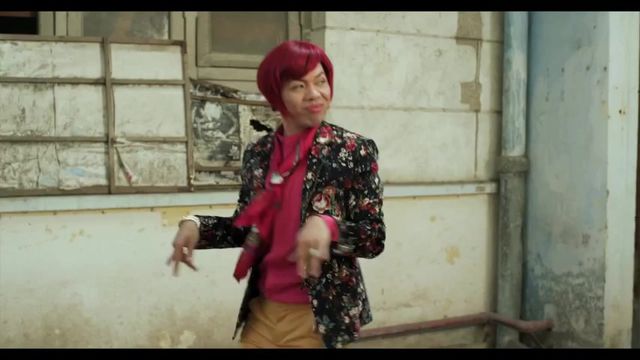
While many younger Vietnamese are quite comfortable with the idea of homosexuality, but quite anxious about the possibility of actually being gay, mainstream Vietnamese culture is just anxious and in denial. Possibly the worst aspect of the situation are the insults Vietnamese movie directors deliver to the LGBT community in mainstream films on a regular basis. Every year sees the release of a couple of home-grown comedies whose main character is a cheap caricature of an ugly, not very intelligent woman - and whose plot inevitably involves him/her having to get over a crush on the straight male lead.

*

Unlike in the West, drugs are unambiguously very uncool in today's Vietnam.

Very few Vietnamese kids feel the need to unwind with a spot of weed or bend their Friday nights into interesting shapes with Ecstasy. (Quite cool Vietnamese kids approve of the death penalty, which the Vietnamese government makes regular use of for drug offences.) Likewise, very few people in Vietnam fall for the bohemian argument that drugs are a laudable, really rather sexy, form of protest against bad social reality or a vehicle of personal expression or in some sense mind-expanding, “philosophical”.

Medium-ranking police officials on the other hand get interviewed on tv by breathless junior reporters whenever they conduct successful drug raids. The job of the reporters in such situations is to express a certain sort of frisky admiration; the job of the cops is to sound as if no one has ever put one past them in the history of the world. Coolness is something it is obviously pretty easy to exude when you have a 20 year-old intern getting het up about what you had for breakfast on the morning of the big bust. Plain-clothes police in Vietnam are definitely quite hip.

Again, while it is considered uncool to worry too much (eg like your parents) about female drunkenness, regularly getting drunk for Vietnamese women is definitely not cool either. Drinking expensive cocktails is for tryhards. Cavorting on table-tops for the benefit (i.e. torment) of heavily drinking men is for sluts. And drinking with the heavily drinking men, the way some Western girls do – because female equality means taking men on in the various pissing contests that their social lives revolve around, doesn’t it? – is not considered even remotely admirable or courageous. (Being a heavy drinking Vietnamese guy though is quite cool, if it shows you know how to enjoy yourself.)

As for rock n roll – well, some middle-aged Vietnamese folk have heard of The Rolling Stones and Queen, but frankly as a nation Vietnam was up to slightly different stuff during the heyday of Western pop culture - fighting major wars and picking up the pieces for example. Most of the various sub-moods that were minted by the greats of American pop and rock had lost most of their attraction before Vietnam was ready for them.

Rock n roll at its best, you might say, helped Western 20-somethings express a range of negative truths about how angry or disillusioned life made them feel in the gilded cage of Western society from the 60's onwards. It captured certain heroic sensations of quixotry, desolation. It gave voice to a bit of rogue male tenderness of heart (or at least offset the blasé cult of male toughness that a lot of other rock n roll was about). It also let loose the eloquence, intelligence and general sassiness of women who wanted to make up their own lives. 

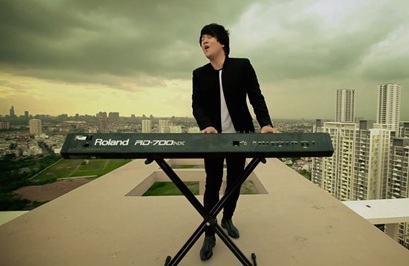
None of these cultural gestures means that much in a Vietnamese context. Vpop – which is the overwhelming exception to the rule that Vietnamese cool comes from outside Vietnam – hardly bothers with minority emotions or negative truths. About the only sensation it is interested in is teenage love gone bad; year after year, the Vpop machine churns out the same old videos of gym-fit boy-men emoting into the stratosphere:

Oh, and quite a few of Hồ Ngọc Hà doing what the idea of love gone bad makes Hồ Ngọc Hà want to do – close her eyes, shake her glossy mane and go round and round in circles. . .

*

As this list indicates, what’s cool today in Vietnam hardly invests at all in the deeper attitudinal complexes of Western cool and maybe this is what gives it its special air of groundless drifting, pure spectacle. Depending on how you look at it, you can see it as a playful, purely aesthetic phenomenon, or as a particularly self-absorbed form of consumerism. Asia, it has to be said, has known its floating worlds before, but nothing even vaguely like this.

For better or worse, one of the other main things that is not cool in Vietnam is irony. Like sex, irony, you’d have to say, is not yet cool – the Vietnamese, at this stage of developments, are not yet ready to mock their own drift into materialism, and they are still too attached to the communist idea of the nation to mock seriously at political authority. Vietnamese humour still has something gentle and positive about it - something that to Westerners feels totally before the fall. In general, if you put your tongue too far in your cheek in Vietnam nowadays, the kids will just not get it. Saying one thing and meaning another is neither cool nor uncool, it’s incomprehensible.

Last of all, there's politics. One of the complicated issues it is definitely worth pointing out about Vietnamese social life nowadays is how uncool politics has become. Yes, a lot of young Vietnamese feel an abstract admiration for the achievements of the nation under Communist leadership (mainly – winning the war). Yes, they appreciate that Uncle Hồ and General Giáp had their understated style and their robust political beliefs – and a considerable willingness to stick up for them. Maybe some younger Vietnamese have fond memories of the fun they had as kids at Party-sponsored jamborees. But all of this is coupled with a nigh-on total lack of interest in either the politics or the policy-settings of the Communist Party.

No section in a Vietnamese bookshop goes more untouched than the corner devoted to political doctrine. No subjects within the school curriculum are considered more deadly than the introduction to Marx and Lenin and the drills in Communist history which all Vietnamese kids get put through.

The standard response you’ll get from a Vietnamese 20-something, if you ask what the slogan on one of the million big red banners actually means is – Who knows? Why are they always 50-feet long? The Vietnamese Communist Party doesn’t seem to have adjusted to one of the basic conditions of urban living – that an idea or image, to be lodged in the mind of casual passers-by, has to be compact enough to be taken in with a quick sweep of the eye.


Membership of the Party is still something Vietnamese go in for in order to realize worthy social goals, not just because it’s the best way to move up in the world. But imbuing the party with any of the attributes of cool is the last thing on their minds – either on the minds of Vietnam’s leaders, or the country's politically rather mellow citizens.

There’s almost certainly a method to this. Live in Vietnam for a couple of years and you might find yourself thinking that the Vietnamese Communist Party is happy to seem as boring as possible because it doesn’t want to be subject to the iron law of cool: that what is cool one day will become uncool the next.

Vietnamese cool, like Asian cool in general, has a very definitely bearable lightness. Political ideals, let alone political realities, are by comparison unbearably heavy. Vietnamese cool floats along on the assumption that both the ideals and the realities can be safely put to one side. And in this it's pretty similar to other regional versions of Asian cool too.

Saturday, October 24, 2015

15 Things about Vietnam #7 - Vietnamese Karaoke

A night at a karaoke bar is one of the most dependable communal joys of Vietnamese life. Most Vietnamese men think they can sing, even if they are tone-deaf and arrhythmic. Heavy consumption of draught beer has a key role to play in this situation.  

Essentially, there are three types of karaoke night that Vietnamese people tend to take part in nowadays.

The first is all-female karaoke, involving a select bunch of girls from the same, or occasionally different, walks of life. As in the West, karaoke is considered a perfect group activity for a hen's night - with one major difference: Vietnamese women never get blind drunk and they often don't drink at all. All-female karaoke tends to be marked by manifest feelings of warmth and togetherness:


Competitiveness is rare and this type of ending:

 
is unheard of.

The second type is what I would describe as all-male howling and lechery. Unlike Vietnamese women, Vietnamese men tend to drink very heavily when they go out for karaoke with their buddies. Unsurprisingly, this tends to increase the amount of soul they feel they are putting into their performances: 

 
It also of course affects their general levels of continence. Apart from singing out of tune, they spend a lot of their time daring each other to goose the waitress who appears every now and then to lay out more beer and snacks.

Once they have had a good howl, they often pack off to a massage parlour. Or the karaoke studio itself turns into a massage parlour. That's right, among the many types of karaoke studio that exist in today's Vietnam, there are places where the waitresses are paid to sit in the laps of the male clientele, or perform various repetitive operations upon the laps of the male clientele. . . We are talking about what the Vietnamese call "karaoke ôm". ("Ôm" here means "cuddle" and obviously has nothing to do with the mystical noise emitted by Buddhist monks in their efforts to reach wordless realms of spiritual intensity.)

Thirdly, we can say there is co-ed karaoke, which falls somewhere in between the first two types. It can be anything from fun to agony: fun, in my experience, when it involves the sort of jaunty display of taste and talent that karaoke involves in the rest of the world; agony when there are lots of couples involved, the men get wasted, and their wives/girlfriends have to sit around and watch.


Now, the key question here for a Western visitor to Vietnam is this: how much should you try to get involved in Vietnamese karaoke? One thing's for sure, if you want to make a massive hit of yourself in Vietnam, then learn to sing a few popular Vietnamese karaoke numbers.

Yes, you can always search karaoke machines for tinny arrangements of Queen or the Ramones. Some Vietnamese will be mildly impressed if you can hit the notes and get a bit of expression happening. But except for a few advanced youngsters, Vietnamese people deeply don't get Western music; they don't understand the lyrics and they doubly don't understand the attitudes that the music is meant to evoke.

You may think that Bohemian Rhapsody is a masterpiece of dark lyricism, that Bruce Springsteen is a rough diamond with a deep sense of social commitment or even that Abba is innocent, clean fun, but you're unlikely to convince normal Vietnamese people of the truth of these ideas, no matter how talented an amateur vocalist you are.

So what you should do if you plan on staying in Vietnam for more than two or three months, is take the plunge and learn to sing karaoke the Vietnamese way.

Before getting started, be advised though - even if you have considerable musical talent, getting your head around Vietnamese music is hard.

Except for the plainest pop music (Vpop), real Vietnamese music tends to be melodically quite messy. To Western ears, there are few simple tunes and even fewer simple chord progressions. So the songs are hard to listen to, and even harder to memorize.

And then there are the lyrics, which it's going to take you ages to learn properly: the Vietnamese language has ten different vowels and a range of consonants that look a bit like English consonants but sound like absolute nonsense when pronounced the English way.

Which is not to say a butchered version of a Vietnamese pop tune won't win you lots of friends and admirers. But which is to say - if you want to actually get good at Vietnamese karaoke, then a crash course at a Vietnamese language centre wouldn't go astray.

The other thing that makes Vietnamese karaoke hard to come at from a Western point of view is the sheer schlockiness of much of it. Vietnamese popular music just doesn't express that much of the toughness, weirdness, rage, boredom or sexual desire that the classics of Western music gave voice to from the 1960's onwards. Hot sassy women who want to make up their own lives are rare in the Vietnamese music world. So are cool, embittered men who see themselves as refugees from the dominant social order (with one main exception). What Vietnamese music tends to be about are traditional romantic themes: love, break-ups, separation, plus a whole lot of fuzzy nostalgic stuff about the natural beauty of your home village.

Unlike Westerners, Vietnamese men quite like to sing songs about the devotion of Vietnamese mothers to the family hearth. And Vietnamese girls really, really like to sing along to the soppy tunes of androgynous Korean boy-men with big hair and tears in their eyes.

 
To many Westerners, the result is incomprehensible, both musically and emotionally. And it's made worse by the way the songs are packaged in Vietnamese karaoke machines. While the hard-to-listen-to music plays, an even-harder-to-watch sequence of badly edited images starts up. Evocative shots of lotus ponds, nobbly hills and flowing brooks (or, even worse, evocative shots of major Vietnamese infrastructure projects) are spliced together to produce just the right mix of patriotism and provincial pride: something many Vietnamese find vastly satisfying, especially once they've put away half a dozen cans of Heineken. . .

*

Karaoke has become such a big thing in Vietnam over the past 20 years that many middle class homes nowadays boast a karaoke room, as well as a more formal guest room. Vietnamese wives tend to like them - partly because of the way they project economic status, partly, I guess, because they deprive husbands of excuses for beery evenings at the local karaoke ôm.

The widespread Vietnamese ambition to be a fine karaoke singer spreads its influence well beyond the middle-class home though. Year by year, karaoke finds its way into more and more corners of social life.

As we learned a few days ago, once the speeches are over at Vietnamese wedding receptions the mike gets handed to any of the guests who'd like to make a show of their musical talents. The din that results often kills all possibility of conversation, in Vietnamese, English or any other language.

In more advanced form, karaoke takes over Vietnamese tv. In the absence of sensationalist current affairs, talent shows become the main point of interest for the majority of the prime-time audience.


In less advanced form, karaoke takes over your local takeaway, when business is slow in the late afternoon:

 
The popularity of karaoke may have led to the opening of large numbers of private singing schools, but whether it has increased the total amount of harmony in the world is doubtful. The music lessons that most Vietnamese kids get at school are pretty minimal, meaning there are a lot of Vietnamese out there who think of singing as one of their favourite hobbies, but whose ears and voices have had no musical training whatsoever.

Obviously I'm not saying you need to have gone to the Julliard School to be a useful addition to a Vietnamese karaoke night. But surely having a basic sense of tonality couldn't hurt. The songs that get sung during Vietnamese karaoke sessions may sound a bit off-key to Western ears. But the fact is the singers are way off-key themselves a lot of the time.

One thing you'll pick up on, if you stay in Vietnam for a while, is the surprising number of Vietnamese - mainly boys instead of girls - who go about their daily business unselfconsciously - and totally tunelessly - singing tender love-lyrics to themselves. For single Vietnamese men, singing to yourself seems to be a basic expression of romantic authenticity. But it's hard to listen to. And even harder to work out why they do it, given how few women are charmed by men who walk around bellowing in an undertone. . .

The answer of course lies in the institution of karaoke - that soft-edged, beery world which, in their dreams, some Vietnamese men would like to disappear into and never come out of again.

All the world's a stage?

For the younger generation of Vietnamese men, all the world's a studio - where you can serenade your sweetheart, memorialize your mum (and maybe make out with the waitress) - all day, every day, no matter where you are.

Friday, May 14, 2010

The Art of Living: Master K

Some snippets from Master Kung (Confucius) - as he appears in Karl Jaspers' beautiful, simple summation in *The Great Philosophers* (Trans. Ralph Manheim, 1962):

Without learning, all other virtues are obscured as though by a fog and degenerate: without learning, frankness becomes vulgarity; bravery, disobedience; firmness, eccentricity; humanity, stupidity; wisdom, flightiness; sincerity, a plague.

Manners and music are fundamental. The essential is to shape men's nature, not to quench it. The ethos is fashioned in men's association with each other and in government.

A nation can be guided only by custom, not by knowledge.

A man is awakened by the Odes, strengthened by the *li* [imperatives of conduct], perfected by music. - Mere form, like mere knowledge, has no value without the originality that fulfils it, without the humanity that is enacted in it.

Confucius advocates self-mastery, not asceticism. Nature requires to be shaped, but violence can only harm it. Even hatred and anger have their place. The good man can love and hate in the right way. For example - He hates those who themselves are base and slander those who are above them; he hates the bold who know no morality; he hates the reckless, bigoted fanatic.

**What makes a place beautiful is the humanity that dwells there. He who is able to choose and does not settle among humane people is not wise.

Towards friends - Take no friends who are not at least as good as yourself. Loyalty is the foundation. Friends should - loyally admonish one another and tactfully set one another right. Friends can be relied on - Even if the season be cold, we know that pines and cypresses are evergreen.

When an appeal is made to the laws, it means that something is not in order. - When it comes to hearing complaints, I am no better than anyone else, says Master K. What interests me is to see that no complaints arise.

Do nothing overhastily; that will not succeed. Do not consider the small advantage, for no great work can prosper in this way.

**The political conditions must be such as to make effective action possible. Where the prevailing state of mind leaves no room for effective action, the true statesman remains in hiding.

All goodness, truth, beauty are combined in the ideal of the superior man (gentleman, chün-tzu). Noble in birth and endowment, he has the manners of a gentleman and the wisdom of a sage.

The character, cast of thought, gestures of the superior man are described. He is contrasted with the inferior man. The superior man is concerned with justice, the inferior man with profit. The superior man is quiet and serene, the inferior man is always full of anxiety. The superior man is congenial though never stooping to vulgarity; the inferior man is vulgar without being congenial. The superior man is dignified without arrogance; the inferior man is arrogant without dignity. The superior man is steadfast in distress; the inferior man in distress loses all control of himself. The superior man goes searching in himself; the inferior man goes searching in others. The superior man strives upward; the inferior man strives downward. The superior man is independent. He can endure long misfortune as well as long prosperity, and he lives free from fear. He suffers from his own inability, not from others' failure to understand him. He avoids all competition, but if it must be, then only in archery. He is slow in words and quick in action. He is careful not to let his words outshine his deeds: first act, then speak accordingly.

Master K is conscious of facing a great alternative: to retire into solitude or to live in the world and try to shape it. His decision is unequivocal - A man cannot live with the birds and beasts. If I do not live with men, with whom shall I live? And - he who is concerned only with the purity of his own life ruins the great human relations.

In their private lives these two hermits found purity; in their retirement they found what the circumstances demanded. I am different. For me there is nothing that is possible or impossible under all circumstances.

The nature of man is called *jen*. *Jen* is humanity and morality in one. The ideogram means "man" and "two," that is to say: to be human means to be in communication.

**Jen* is the all-embracing source. It is through *jen* that the particular virtue becomes truth. And *jen* is the source of the absolute untainted with expedience - The ethical man puts the difficulty first and the reward last.

In youth when the vital forces are not yet developed, guard against sensuality; in manhood, when the vital forces have attained their full strength, against quarrelsomeness; in old age, when the forces are on the wane, against avarice.

Only the highest wise men and the lowest fools are unchangeable.

Truth and reality are one. The mere idea is as nothing. The root of human salvation lies in the "knowledge that influences reality", that is, in the truth of ideas that are translated into an inner, transforming action.

When he does not understand something, the superior man is reticent.

When Lao-tzu taught that one should repay hostility with good deeds, Master K answered - With what then shall we reward good deeds? No, reward hostility with justice, and good deeds with good deeds.

Those who are capable of self-mastery, who have learned to do what is good and to know what they are doing, will always be few. The people, on the other hand, can be led to follow something; they cannot be led to understand it.

When asked "What is the first thing to be done in order to promote a renewal in disastrous circumstances?" Master K gave a remarkable answer - Words must be set aright. What inheres in words should be brought out. The prince should be a prince, the father a father, the man a man.

Master K refrains from all direct statement on metaphysical questions. Though such an attitude may be put down as agnosticism, it does not signify indifference to the unknowable, but rather a reverence which is unwilling to transform intimation into pseudo-knowledge or lose it in words.

**3 Death offers no ground for emotion, it is not situated in any field of essential meaning. He can indeed lament premature death - That some things germinate but do not flower; that some things flower that do not mature - alas, that happens. But - To die at nightfall, that is not bad. Death has no terrors - When a bird is dying, his song is mournful; when a man is dying, his speech is good.

Master K could lament - The superior man suffers that he must leave the world and that his name is not mentioned. My way is not followed. Whereby shall I be known to posterity? Ah, no one knows me! - But he quickly consoles himself - I do not grumble against heaven, I am not angry with men. I have searched here below and I am in communication with heaven. Heaven knows me. - He contents himself with his lot - To learn and unceasingly practice, does that not give satisfaction? And if companions come to you from far away, is not that too a ground for rejoicing? And not to grow embittered if men do not know you, is not that noble too? - I will not grieve that men do not know me; I should grieve only if I did not know the others.

The one thing over which a man is master is his own heart. Good or ill fortune is no yardstick of a man's value.

Zilu said: 'If the Lord of Wei were waiting for you to run the government, what would you give priority to?' The Master said: 'What is necessary is to rectify names, is it not?' Zilu said: 'If this were to take place, it would surely be an aberration of yours. Why should they be rectified?' The Master said: 'How uncivilised you are. With regard to what he does not understand the gentleman is urely somewhat reluctant to offer an opinion. If names are not rectified, then words are not appropriate. If words are not appropriate, then deeds are not accomplished. If deeds are not accomplished, then the rites and music do not flourish. If the rites and music do not flourish, then punishments do not hit the mark. If punishments do not hit the mark, then the people have nowhere to put hand and foot. So when gentleman names something, the name can definitely be used in speech; and when he says something, it can definitely be put into practice. In his utterances the gentleman is definitely not casual about anything.'

Master K did not turn away from the world to concentrate on himself. He devised no economic institutions, no legislation, no special form of government; he was passionately concerned with something that cannot be directly willed but only fostered indirectly, something on which everything else depends: the spirit of the whole in the ethical-political state and the inner make-up of every individual man as a part of the whole. He had no fundamental religious experience, no revelation; he achieved no inner rebirth, he was not a mystic. But neither was he a rationalist; in his thinking, rather, he was guided by the idea of an encompassing community, through which man becomes man. His passion was for beauty, order, truthfulness, and happiness in the world. And all these are grounded in something that is not made meaningless by failure and death.

What did Master K do? Unlike Lao-Tzu, he entered into the business of the world, driven by the idea that he was called to improve human conditions. He founded a school for future statesmen. He edited the classics. But still more significant: In China, Master K was the first great flaring up of reason in all its breadth and potentiality - and this in a man of the people.